Become a Instructor

Blogs

logotype
Menu
  • Courses
    • Salesforce Admin
    • Salesforce Developer
    • Advance Java Training
    • Buisness Analyst
    • Digital Marketing
    • Oracle DBA
    • QA Testing Course
    • SQL server Training
  • Register
+1-571 989 9489
logotype
  • Courses
    • Salesforce Admin
    • Salesforce Developer
    • Advance Java Training
    • Buisness Analyst
    • Digital Marketing
    • Oracle DBA
    • QA Testing Course
    • SQL server Training
  • Register
  • +1-571 989 9489

Become a Instructor

Blogs

logotype
Menu
  • Courses
    • Salesforce Admin
    • Salesforce Developer
    • Advance Java Training
    • Buisness Analyst
    • Digital Marketing
    • Oracle DBA
    • QA Testing Course
    • SQL server Training
  • Register
+1-571 989 9489
  • Courses
    • Salesforce Admin
    • Salesforce Developer
    • Advance Java Training
    • Buisness Analyst
    • Digital Marketing
    • Oracle DBA
    • QA Testing Course
    • SQL server Training
  • Register
  • +1-571 989 9489
logotype
logotype
  • Courses
    • Salesforce Admin
    • Salesforce Developer
    • Advance Java Training
    • Buisness Analyst
    • Digital Marketing
    • Oracle DBA
    • QA Testing Course
    • SQL server Training
  • Register
  • +1-571 989 9489
Author: admin
Home admin Page 2
Artificial Intelligenceinformation technologyAvatar of adminadmin0 Comments
Share article:TwitterFacebookLinkedin
152 Views
1 Like

Getting Started with Agentforce Models AI API: A Complete Beginner’s Guide

Artificial intelligence is one of the major trends of business in recent times, and Salesforce is the company to follow the change with its Agentforce ecosystem. For new users, Agentforce Models AI API, is easy to use. Its aim is to help you create intelligent automation and conversational capabilities right inside Salesforce. 

This beginner’s guide is just what you need if you want to learn about the different features of the Salesforce Agentforce or are just curious about how to start building a Salesforce agent. Let’s start!

What Is Agentforce Models AI API? 

Agentforce Models AI API is Salesforce’s specially designed interface that enables developers and administrators to give a prompt to AI models and get back well-organised, CRM-aware answers. In contrast to standard AI platforms, Agentforce models are developed particularly to understand Salesforce objects, workflows, and terminologies. 

Since it is a part of the automated Salesforce tool, you can rest assured that there won’t be any external data transfers or that you’ll have to deal with compliance issues. Everything is accomplished within a secure and regulated environment that is perfect for companies that are looking for a safe, yet efficient way, to adopt AI. 

For beginners, the benefit couldn’t be more obvious: the API offers a straightforward method through which one can inject intelligence into the workflows without the need for profound technical knowledge.

Why Agentforce Matters for Beginners 

Using AI for the first time is usually intimidating. However, Agentforce makes the process easy. The API is built in such a way that it is user-friendly; hence, even a person with a very basic knowledge of how REST calls work can make his/her first request. In case you have utilised tools similar to Postman or you have written a simple Apex callout, you are good to go with your trial.

Another great benefit is that it is able to grasp the CRM context. The tasks of summarising a case, rewriting a follow-up email, and recommending next steps for a lead are examples of situations where the AI can figure out how to do these within the Salesforce framework. This, in turn, makes the result better and the prompt shorter. 

Moreover, the platform will not outgrow you. You may initiate a small project, say, by implementing automated email drafting and then proceed to more complicated features such as conversation memory, CRM-integrated reasoning, and fully autonomous Salesforce agents.

How the API Works 

The operation of the Agentforce Models AI API is remarkably simple. You draft a prompt (working, questions, a piece of writing) and send it to the API endpoint. The model goes through your input and comes up with a detailed answer. It is up to you to decide the manner and the place where you want to implement that answer in Salesforce. 

This answer can be made visible in a Flow, be the input for a Lightning Web Component, get stored in a field, or be further processed by Apex. Due to the fact that Salesforce is compatible with several integration methods, you have the freedom to customise the experience in accordance with your organisation’s requirements. 

Many beginners are impressed with how fast they can get what they have been aiming for. An extremely simple command, such as “Summarise this customer email and suggest an action plan”, serves as proof of the API’s power even in the first few trials.

Setting Up Agentforce for the First Time 

  • To start setting up your Agentforce, first of all, make sure that AI Cloud or Agentforce features are turned on in your org. 
  • You must be provided with the right licences and allowed the correct permissions to be able to access the models. 
  • Afterwards, the creation of a connected app with OAuth enabled is your next step. This is what will allow the authentication needed to make API calls in a safe way. 
  • To boost the convenience of the whole process, Salesforce provides activation and authentication guided wizards that even people with minimal technical background can easily follow. 
  • The step after the configuration is the selection of the model to be used. 
  • Normally, Salesforce offers a variety of model choices – from general to CRM specialised ones – thus, you can decide which one suits your work the best. 
  • When you and everything are set, you can approach your very first API call. 

The time when you get your initial AI-generated output is the time when the power of Agentforce becomes evident.

Final Thoughts 

The Agentforce Models AI API is among the easiest to use and access tools in the world of Salesforce. This tool gives beginner-level users the liberty to learn and generate low-complexity and value-driven automations. Thanks to its security, CRM integration, and great flexibility, you can gradually shift from a very simple, prompt-based interactions to highly complex AI-driven workflows. 

As organisations increasingly adopt Salesforce Agentforce, having the ability to build and leverage AI-powered Salesforce agents will become a critical skill. With this API, you have everything you need to begin your journey confidently and creatively.

READ MORE
Artificial Intelligenceinformation technologyAvatar of adminadmin0 Comments
Share article:TwitterFacebookLinkedin
172 Views
0 Likes

Start​‍​‌‍​‍‌​‍​‌‍​‍‌ Your Automation Journey in Financial Services with Salesforce

Automation is the engine that drives modern financial services in the fastest and smoothest manner. With increasing customer expectations and tightening regulations, financial institutions require systems that not only facilitate their operations but also lower risks and allow decision-making on the basis of data. As a result of automation, an organization reassures itself against trouble by optimizing the flow of tasks, communication, and decision-making in the office. Salesforce is the most important part of this transition, as it equips financial institutions with a potent blend of automation features and intelligent workflows. For the people working in the field and willing to keep up with the pace, it has now become essential to get proficient in these tools through a targeted Salesforce AI training program, and we will learn about the same in detail.

Why Automation Matters in Financial Services

Each day, financial service companies are bombarded with numerous documents and data. These include loan applications, KYC documents, claims forms, customer queries, compliance reviews, and the list goes on. If these were handled by human workers, the whole process would be slow, with a high probability of mistakes. Automation is the savior that eliminates the hurdles caused by manual work and takes data handling, teamwork, and decision-making to the next level. Consequently, organizations accelerate the time to market, bring down the costs, and increase the customer satisfaction rate.

What makes Salesforce unique is the fact that the automation functionalities it delivers are integrated with the CRM platform. The procedures of customer onboarding, case management, underwriting, service requests, financial planning, as well as compliance could be automated in one integrated platform.

How Salesforce Powers Automation

Salesforce offers a selection of automation tools that the employees of financial institutions may implement irrespective of their technological proficiency. Some of the most significant are:

  1. Salesforce Flow

Flow helps organizations to get rid of repetitive work through automation and to establish entire workflows without coding. It can be used for verifying customer information, routing customer service inquiries, or even compliance alerts that are sent automatically. Flow is a great way to get a hold of consistency and accuracy in your daily operations.

  1. Financial Services Cloud (FSC)

FSC is one of the best CRM solutions for banks, insurers, and wealth management firms. It delivers ready-to-go automation templates for onboarding, risk assessments, client management, policy servicing, and financial goals tracking. This implementation is very quick and efficient, and it is always up to the industry standards regarding the workflows.

  1. Integrations and APIs

Banks and other financial companies have been using their traditional systems for a long time, and they cannot just dispose of them overnight. Salesforce solves this problem by providing reliable integrations and APIs that allow data to be exchanged smoothly between different platforms. This, in turn, makes it feasible to execute business-wide automation.

Future with Salesforce Einstein AI

The next step of automation in financial services will be intelligence, and with Salesforce Einstein AI, everyday users will find AI more accessible than ever.

Einstein AI support organizations in:

  • Predicting customer demands that may also include the probability of accepting a loan, buying a policy, or closing the account.
  • Identifying variances that help compliance officers in locating the source of the most suspicious or riskiest activities.
  • Making customer interaction easier through personalized recommendations.
  • Knowing the documents’ content in order to be able to help the underwriting or claims departments.
  • Providing brief but very useful information to advisors, bankers, and ​‍​‌‍​‍‌​‍​‌‍​‍‌analysts.

What is particularly effective about Salesforce Einstein AI is that it can be embedded directly in the routines that people use on a daily basis. So, instead of requiring data scientists or difficult models, it helps professionals in finance to make better decisions right away.

Why Salesforce AI Training Is Becoming Essential

As the breakthrough of automation and AI in financial services issues, professionals who are skilled in implementing these technologies, have become highly sought after. Participating in Salesforce AI training will enable learners to:

  • Understand​‍​‌‍​‍‌​‍​‌‍​‍‌ how AI and automation are used in the Salesforce setting.
  • Construct and upgrade flows, automated workflows, and data-driven processes.
  • Use Einstein AI to drive predictions, insights, and deliver personalized customer experiences.
  • Focus on customer service by implementing measures that will lessen the manual workload.

Financial institutions with automation tools upskill their employees and enjoy higher productivity, better compliance, and increased customer engagement. Meanwhile, for individuals, it will serve as a stepping stone towards the positions of Salesforce Administrator, Business Analyst, Financial Services Specialist, or AI-enabled CRM Consultant.

Conclusion

As well all know, the financial services industry is rapidly moving towards automation. Those who are adapting it will be the ones creating the next generation of customer experiences and financial innovations. For the same you must start your automation journey with Salesforce to achieve the technological change and make your entire system cleverer. You can do this by joining the best and most popular Salesforce Developer Training offered by QuantoKnack Training. So what are you waiting for start smart now!

READ MORE
information technologyArtificial IntelligenceTECHAvatar of adminadmin0 Comments
Share article:TwitterFacebookLinkedin
187 Views
3 Likes

Why​‍​‌‍​‍‌​‍​‌‍​‍‌ Built-In Payment Processing Makes Salesforce More Powerful

In a world where business operations must be fast, accurate, and seamless, an integrated payment system within a customer relationship platform can have a major impact. Built-in payment processing is a handy and strategic step used by companies that use Salesforce. 

Anyone seeking Salesforce developer training needs to understand how payment integration works in Salesforce. This knowledge shows how modern Salesforce-based systems are built for scalability, efficiency, and strong data integrity, which is also essential for those aiming for Salesforce developer certification.

So hang on, because in this article we will explore all the possibilities of built-in payment processing that makes Salesforce extremely powerful.

Real-time Integration with Reduced Manual Work

Perhaps the most significant advantage of built-in payment processing is that the customer’s payment can be recorded against their invoice or account in Salesforce and that too in real time. This totally eliminates the need for data to be taken out and re-entered from different systems, thus reducing human errors and saving the finance teams a lot of time and effort in the reconciliation process. 

From a developer’s point of view, this situation allows solutions to revolve around a single canonical data source, thus lowering the level of complexity and elevating maintainability.

Streamlined Quote-to-Cash Workflow

Embedding payment processing in Salesforce gives the company the advantage of having the whole sales lifecycle, which includes lead, quote, invoice, and payment, in a single integrated platform. This “quote-to-cash” process gets much more efficient with features like, sales reps can create a quote, email it to the customer, and enable the customer to pay immediately through a secure payment link all without leaving the Salesforce environment.

Stronger Data Accuracy and Unified Records

Data consistency increases when several functions like payments, invoices, customer records, and transaction histories all comes under one roof, Salesforce. This approach also ensures that mismatches won’t occur between external payment systems and CRM records. ‘One data model’ means finance, sales, and support teams all coming from the same source. This further leads to better forecasting and reporting, eventually making processes like renewals and upsells a lot easier. For certified Salesforce developers, that solid foundation of data lets them create powerful dashboards, reports, and analytics.

Automated Subscription and Recurring Billing

The key to most businesses nowadays is a subscription or membership model, making recurring billing the backbone of their operations. Native Salesforce payment solutions support recurring billing, auto-renewals, retries in case of failed payments, and all the related billing logic. Best of all, this is managed within the Salesforce billing platform. This also reduces the risks of missed payments and revenue streams are kept stable.

Built-in Security, Compliance and Lower Maintenance Overhead

Web payment processing deals with sensitive financial information, with regulatory requirements on security standards such as PCI compliance. Payment processing natively in Salesforce includes tokenization, secure data handling, and adherence to payment industry security standards. The entire process becomes a lot easier when you find all these activities within Salesforce, avoiding complex middleware or custom connectors being required. This minimizes efforts from the IT department and also reduces maintenance burdens. Developers who successfully complete their Salesforce developer training know how to apply these built-in security features correctly and safely to avoid compliance risk.

Better Customer Experience and Operational Efficiency

Including a payment link in an invoice or quote that customers can use immediately helps eliminate hassle and delays. Embedded payment processing creates a win-win for the users. It accelerates cash flow, reduces admin work, and prevents delays caused by disjointed payment systems.

The developer to whom it is possible to provide such a smooth, integrated experience thereby gains a competitive advantage, and this is often the case in the real-world scenarios of Salesforce developer certification.

Why This Matters for Salesforce Developers

As companies demand more and more end-to-end digital processes, the need for developers who are capable of creating seamless payment workflows in Salesforce also increases. A developer proficient in Salesforce will recognize that integrating payment-processing features such as real-time posting, secure tokenization, automation of recurring billing, and creating a seamless quote-to-cash cycle. Such professionals are in huge demand. Those who have perfected these integrations and scenarios as part of their Salesforce developer training or Salesforce developer certification are the ones who attract employers the most. 

READ MORE
information technologyTECHAvatar of adminadmin0 Comments
Share article:TwitterFacebookLinkedin
180 Views
3 Likes

A Complete Guide: What Is a Record-Triggered Flow in Salesforce?

Salesforce has brought dramatic changes in how businesses handle automation, efficiency, and customer engagement, and has taken it to the bright side. Among its many intelligent tools, one stands out because of its power and effortless usability, and that is the Record-Triggered Flow. Loaded with these astounding features, everyone’s willing to get hold of it, whether it’s an aspiring professional enrolled in a Salesforce developer course or an experienced administrator refining their automation skills. Understanding how a record-triggered flow works is essential in today’s Salesforce ecosystem.

What is Record-Triggered Flow?

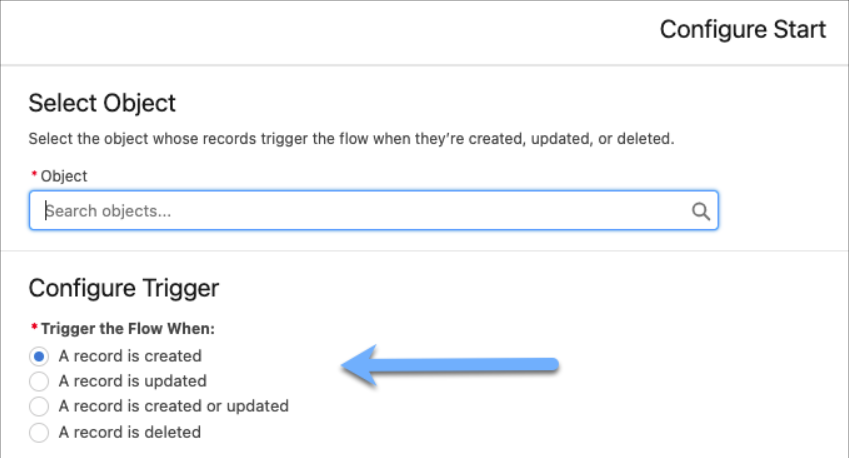
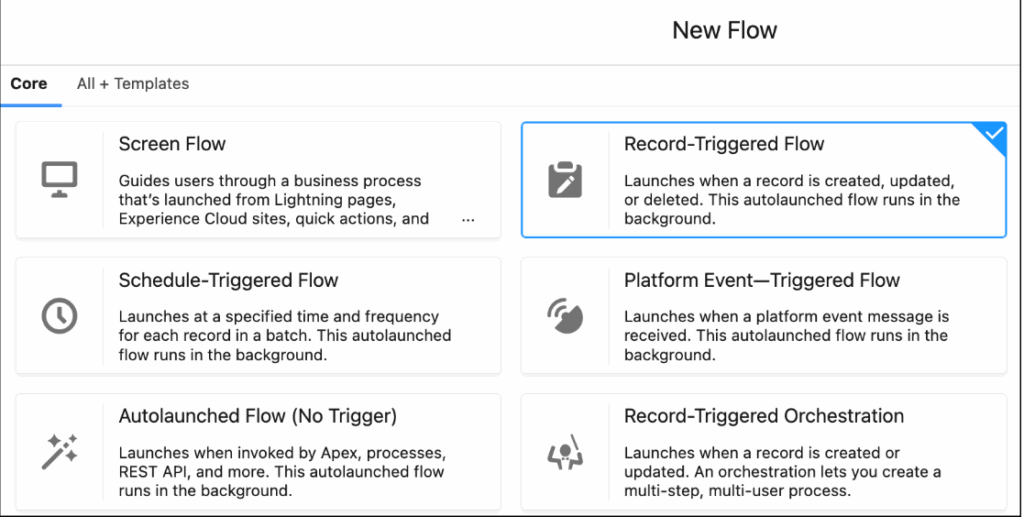
Record-Triggered Flow is one of the most powerful types of automation in Salesforce that a user does not have to manually start as it is always running in the background and reacts to the addition, modification, or deletion of a record in the system by itself. Another way of looking at it is that it is a set of commands that direct Salesforce to execute particular operations only when certain criteria are satisfied. 

For example, if a new Lead is created, Salesforce can instantly assign a new lead to a sales professional, send a welcome email, or update a linked record, and that too without a blink. The system handles all these operations immediately in the background instead of manually, which is time-saving and also ensures that the work is done correctly, consistently, and ​‍​‌‍​‍‌​‍​‌‍​‍‌efficiently.

salesforce developer classess
A Complete Guide: What Is a Record-Triggered Flow in Salesforce? 3

Source: Salesforce blogs

The​‍​‌‍​‍‌​‍​‌‍​‍‌ flow was built via Flow Builder, which is a no-code automation tool of Salesforce that is based on a simple drag-and-drop interface and may be used effectively by developers and administrators for the creation of complex processes. By removing the requirement for traditional Apex coding in numerous business cases, it is accessible even to those with minimal programming ‍​‌‍​‍‌​‍​‌‍​‍‌skills.

salesforce developer cerrification
A Complete Guide: What Is a Record-Triggered Flow in Salesforce? 4

Source: Salesforce blogs 

How Record-Triggered Flow Works?

Changes to a record affect how a record-triggered flow works. The process starts with a trigger event, such as adding and changing a record. Salesforce then checks to see if the record meets certain requirements. If the conditions are met, the flow will do a series of tasks that you have set.

Think about a chance that moves on to the “Closed Won” stage. A record-triggered flow can create a task for the customer success team, update the revenue total, and send an email to the finance department without any human involvement. Making the whole process faster and more accurate without any help from people

Types of Record-Triggered Flow?

Salesforce has two main types of record-triggered flows. It is very important to know when to use each type of flow in order to design efficient automation. One can easily learn these skills in the Salesforce developer training programs. 

In the automation sequence, each of these flows is assigned a particular task: 

  • Before-Save Flows (Fast Field Updates): These flows are initiated before the record is saved in the database, making them perfect for assembling quick changes to the same record. While doing so, it accelerates performance and consumes fewer system resources. 
  • After-Save Flows (Actions and Related Records): These flows are executed after the record is saved and are therefore utilized for actions that require the record to be in the database first, such as sending notifications, creating related records, or updating multiple records.

What is the Importance of Record-Triggered Flow?

Gradually, Salesforce is replacing the old automation tools, such as Process Builder and Workflow Rules, with Flow Builder. This switch means that record-triggered flows are not just another feature; they represent the future of Salesforce automation. 

Here are some of the reasons that show the importance of the Record-Triggered Flow: 

  • Help you with the automation of complex tasks without the need for coding. 
  • With the advent of before-save flows, you can see a great improvement in performance. 
  • It also provides developers and admins with more alternatives for handling logic in one place. 
  • It further guarantees that data is accurate by reducing the number of errors that are made manually. 
  • The best feature of the record-triggered flow is its compatibility with the roadmap of Salesforce.

In case you want to be an automation expert, mastering the use of flows is a crucial step for anyone enrolled in a Salesforce developer ‍​‌‍​‍‌​‍​‌‍​‍‌course.

How to Learn Record-Triggered Flow

If you are a developer in a Salesforce ecosystem and you want to raise your knowledge, you can learn to optimize record-triggered flows. You can get the finest understanding of it by joining the professional Salesforce developer training course. This program will help you understand how to:

  • Create flows with Flow Builder. 
  • Using Apex to connect flows and get more advanced features. 
  • Design triggers and conditions easily and effectively.

Conclusion

I hope the article has helped you understand that Record-Triggered Flow is one of the major upgrading and transformative factors for Salesforce automation processes. By decreasing human intervention and ensuring that all operations run smoothly in the background, they become more efficient. 

So, if you want to boost your knowledge in Salesforce, then you should check out Salesforce developer courses at Quantoknack Training. They offer the best Salesforce developer training programs, which will help you become an automation expert by gaining a deeper understanding of flow design and start a rewarding career. 

READ MORE
information technologyArtificial IntelligenceTECHAvatar of adminadmin0 Comments
Share article:TwitterFacebookLinkedin
127 Views
1 Like

From Data to Decisions: How Salesforce AI Training Transforms Your Career

A decade ago, data was power. Today, intelligence is. We are all living in a world where data is generated with every click, purchase, and conversation. One’s ability to turn that data into smart business decisions has become a kind of superpower, Salesforce AI Training leads not only to software mastery but also to strategic thinking. Your future as an aspiring developer or a seasoned professional will flourish as you learn to harness the power of Salesforce AI tools.

In this blog, I will help you explore exactly how Salesforce AI Training will help you achieve your professional goals in the year 2026, and additionally, how joining Salesforce Developer Training will not just provide you with a detailed understanding of the tool but also help you start a rewarding career.

The Rise of AI in Salesforce for Smart Decision-Making

For nearly a decade, Salesforce has been the top choice of the world’s leading Customer Relationship Management (CRM) platform. However, with the addition of AI through Salesforce Einstein, it is now a force to be reckoned with in the prediction domain. By bringing automation, analytics, and intelligent recommendations right to the CRM interface, Einstein makes it easy for any business, regardless of its size, to understand the complex data they have and to use it. 

Staff members who have gone through a Salesforce AI Training program are the ones who, with these sophisticated tools at their disposal, can make smart, data-based decisions that will lead to the accomplishment of their ​‍​‌‍​‍‌​‍​‌‍​‍‌goals. 

What Will be the Real-World Impact

Imagine​‍​‌‍​‍‌​‍​‌‍​‍‌ if you were working in a retail company where more and more customers are leaving your platform every day. Normally, by traditional analysis, it would take you several weeks to understand the problem. However, using Salesforce AI tools, the identification of customers at risk of leaving, understanding of their buying behavior, and the creation of personalized retention strategies can be done in no time and all this within the CRM dashboard. 

This is the kind of change that Salesforce AI technology can do. It essentially converts the data into decisions that can be taken immediately and are still well-informed. And it is the professionals who are trained in Salesforce AI that make this change ​‍​‌‍​‍‌​‍​‌‍​‍‌happen.

Why Salesforce AI Training is a Career Game-Changer in 2026

The demand for Salesforce professionals is growing rapidly. According to recent market research, Salesforce and its ecosystem are expected to create over 9 million jobs by 2026. Salesforce​‍​‌‍​‍‌​‍​‌‍​‍‌ AI Training can change the way you operate along your career path in the following manner:

1. Bridging the Gap Between Data and Strategy

The reality is that every company has data, but not all companies understand how to use this data to come up with strategies that are both meaningful and impactful. Salesforce AI Training enables you to understand trends, create insights, and make the decision process automatic. 

2. High Demand Across Industries

Businesses that are integrating Salesforce to improve customer experience are no longer limited to one industry but span over healthcare, finance, retail, and tech startups. In addition to this, with the advent of AI, now employers are more and more hiring professionals who have knowledge of AI integrated along with the professional tools. 

Therefore, a trained Salesforce professional has the freedom to choose among different positions such as AI Specialist, Salesforce Developer, CRM Analyst, or Data Integration Consultant.

3. Lucrative Career Growth

Salesforce-certified professionals are in most cases, the ones who get the highest salaries. One can make up to £85,000 per year as a Salesforce Developer with AI expertise, according to Glassdoor and the figure can go even higher with more years of experience.

4. Future-Proof Skill Set

Today, the world is changing fast with AI. By doing Salesforce AI Training, you get to the other side of the fence as a winner with skills that will always be relevant regardless of how fast technology changes. 

Why You Should Choose Salesforce Developer Training?

While a Salesforce AI training program emphasizes the use of AI tools for more intelligent decision-making, a Salesforce Developer Training is all about constructing and personalizing these tools.

As a developer trainee, you will get to: 

  • Understand and learn to work with the Salesforce Object Model
  • Improve your Apex programming skills for writing and debugging code. 
  • Create and manage Triggers for automating business processes. 
  • Work with large data volumes through Batch Processing and develop modern, user-friendly apps with the help of Lightning Web Components. 
  • Develop controllers to handle user interactions and business logic. 
  • Use JavaScript and HTML for the creation of dynamic and interactive components. 
  • Write optimized SOQL and SOSL queries. 
  • Perform importing, exporting, and managing of data using tools like Data ​‍​‌‍​‍‌​‍​‌‍​‍‌Loader.

Separately, Salesforce AI and Developer Training are very useful but when you have both, you will not only be capable of using AI-powered solutions but also creating them which is a skill combination that is highly demanded in the competitive job market.

How to Get Started with Salesforce Training

If you have no previous experience with Salesforce, it is recommended to commence with Salesforce Developer Training to get a grip on the platform’s core features. After you are well-versed in the basics, you can proceed to the Salesforce AI Training.

Several online platforms, such as QuantoKnack provide you with both Salesforce AI and Developer Training, where you can learn the theory and practice at the same time, thus, you will be able to obtain both the certification and the ‍​‌‍​‍‌​‍​‌‍​‍‌confidence.

The Developer Training of QuantoKnack will not just help you get the hold of the above-mentioned objectives but will also assist you with:

  • Mock Interviews
  • Hands-On Experience with Live Projects
  • Placement Assistance

All these features together make QuantoKnack the best online Salesforce Training provider.

Final Thoughts

With what we have seen above, we can surely say that the future is with professionals who are AI competent. The business world is changing rapidly, with AI being the main driver of that change. As firms use more and more smart systems to make decisions, workers who can deal with the confluence of data, technology, and strategy with the help of Salesforce AI training are the ones who will be most ​‍​‌‍​‍‌​‍​‌‍​‍‌employable.

READ MORE
TECHArtificial Intelligenceinformation technologyAvatar of adminadmin0 Comments
Share article:TwitterFacebookLinkedin
182 Views
3 Likes

Boost Productivity and Personalization: The Power of Salesforce Agentforce in 2025

Modern customer service in 2025 requires speedy, tailored, and intelligent interaction. Businesses are always pressured to offer excellent customer experience (CX) through diverse routes and even in a time-efficient & accurate manner. On the other hand, artificial intelligence (AI) is becoming the pillar of consumer engagement as the technology progresses. All these things led to the invention of, Salesforce Agentforce, a high-end platform that provides higher productivity, streamlined functioning, and the best customer experience via personalized communication.

This article will help you enhance your understanding of Salesforce Agentforce and will help you recognize the how it boosts productivity and personalization. Let’s start!

What is Salesforce Agentforce?

Salesforce Agentforce is a customer care platform offering a perfect blend of AI automation, real-time data input, along with customer understanding in order to provide them with the customized services. Unlike traditional customer support systems, which rely heavily on manual effort, Agentforce is an intelligent assistant that not just understands customer intent and predicts needs, but also suggests solutions in real time.

Agentforce, which is powered by Einstein AI, helps agents in automating their routine tasks, getting real-time customer insights, and providing personalized support without any hassle. When it is integrated with Salesforce Live Agent, it allows for natural, conversational-type of interactions, which is a perfect combination of human conversation and AI speed. Additionally, by using the Salesforce Data Cloud, agents are able to see the complete 360° view of each customer. This, in turn, enables them to respond with more context and accuracy. 

How Agentforce Can Boost Productivity and Personalization in 2025

Agentforce is built on the trusted platform of Salesforce, which combines the power of Data and Cloud, Einstein AI, and Live Agent. It involves the technology that helps customer service teams leverage AI without lengthening the process. Therefore, implementation of AI-powered solutions in 2025 is no longer the ultimate goal but rather a natural progress to which businesses are tipped.

1. Automating Repetitive Workflows for Greater Efficiency

These days, business success is the result of a smart combination of automation and human interaction. With Salesforce Agentforce, a support team can automate repetitive tasks such as classification of tickets, routing, and follow-ups. As it is driven by AI, it can handle automation tasks like password resets or order tracking effortlessly. Together, it not only saves time but also expands the possibilities of the workflow. For example, refund processes can be started, the finance department can be notified, and the customers can be updated without any human intervention and faster than you think. 

2. Delivering Hyper-Personalized Customer Experiences

Customers expect a brand to understand their needs and react without being asked. Agentforce, along with the support of the Salesforce Data Cloud unitizes real-time data, making agents familiar with each customer’s history in every detail, this includes previous purchases, preferences, and interactions. If a customer wants to chat using Salesforce Live Agent then Agentforce helps the agent access the most important information in no time and also shows the most appropriate suggestions and solutions. Also, its generative AI writes brand-consistent customer-tailored answers, thus the tone and style of communication remain the same no matter the channel, be it chat, email, or messaging.

3. Empowering Agents with AI Insights

Through AI-driven insights and predictive analytics, Agentforce is a tool that opens new horizons for the agent’s performance. During conversations, it provides guidance to the agents through suggestions that are based on the highest success rates of the past. It recommends certain steps of troubleshooting in case the customer has a technical issue.

4. Efficient Collaboration and Consistency

We can say that collaboration is the core of top-notch support, and thanks to the integration of Agentforce with Slack and Salesforce Service Cloud, it provides a quick exchange of ideas among different divisions. Agents now can quickly consult experts from sales or marketing, ensuring fast and accurate resolutions. This connected approach further enhances teamwork, consistency, and the overall quality of customer support.

Conclusion

In 2025, when digital transformation is happening rapidly, the companies that will be able to mix productivity with personalization will be the ones succeeding in customer engagement. Salesforce Agentforce, which uses Einstein AI and Salesforce Live Agent, is a major innovation in this field. It is a tool that not only help but really transforms every agent into a “super-agent” who can operate in a faster, more intelligent, and more personalized way than ever before. If you want to learn Salesforce Agentforce, you can join hundreds of other learners at QuantoKnack, where we help businesses adopt, train, and optimize Salesforce solutions to drive measurable growth and success.

READ MORE
TECHArtificial Intelligenceinformation technologyAvatar of adminadmin0 Comments
Share article:TwitterFacebookLinkedin
265 Views
4 Likes

ERP for Salesforce Users: Comparing Features, Benefits, and ROI

What​‍​‌‍​‍‌​‍​‌‍​‍‌ if I told you that you have a business to run, and for that, you need to monitor several different tools? Sounds chaotic, right? But by integrating Enterprise Resource Planning (ERP) systems with Customer Relationship Management (CRM) tools like Salesforce, you don’t have to worry about the chaos anymore. The whole process gets faster with this integration. Connecting ERP to Salesforce means that companies establish a single system that improves transparency, simplifies interaction with customers, and enables the company to make more intelligent, data-driven decisions. 

At present, Salesforce is the leading CRM platform for managing sales pipelines, marketing activities, and customer relationships. However, it does not have built-in features for business areas such as finance, supply chain, and inventory management. This blog wil0000l give you deeper insight into the integration of ERP and CRM, which is beneficial for your business in the long run. Furthermore, it illustrates how team empowerment through Salesforce admin training and Salesforce AI training can lead to maximum ‍​‌‍​‍‌​‍​‌‍​‍‌returns.

What is ERP and Salesforce?

Enterprise Resource Planning (ERP) is a software system that uses a centralized database to manage a company’s internal operations, such as finance, HR, procurement, and supply chain. The unified platform gets rid of the data silos, which in turn allows better decision-making and increases efficiency to be increased. 

Salesforce, in contrast, is geared towards managing customer relationships, sales, and marketing. The customer-facing teams are made more powerful through the use of this tool, but the back-office processes are not handled by it. 

Simply speaking: 

• CRM = Customer-focused system 

• ERP = Business operations-focused system 

The connection of ERP to Salesforce is the solution that adequately addresses the problem leaving organizations with the option to take advantage of both systems for a more integrated business ​‍​‌‍​‍‌​‍​‌‍​‍‌strategy. 

Difference between CRM and ERP: Comparing Features 

1. Functionality

    CRM tools like Salesforce are used by sales, marketing, and support teams to manage contacts, communication, and performance, making the task easy for the employees within the organization. However, ERP is used by finance, HR, and operations to manage accounting, payroll, procurement, and compliance. Integrating these systems eliminates data duplication and allows all departments to operate from the same insights, which also means easier handling and processing of data.

    2. Data Management and Automation Capabilities

      One of the major differences between the tools is, CRM systems track customer-centric data which includes managing leads, handling communications, and support cases, while ERP tools manage operational data for the organization like managing invoices, inventory, and production schedules. Integrating both, provides a single, automated tool to manage for both departments, which ensure seamless workflows, fewer manual errors, and faster processes.

      3. Analytics, Reporting, and Seamless Integration

        CRM analytics focus on sales performance and customer engagement, while ERP analytics cover cash flow, cost control, and resource utilization. When integrated, they deliver unified business intelligence like real-time dashboards with both operational and customer metrics.

        Scalability is another and one of the best advantage of both the tools. CRM can handle growing customer bases and marketing channels, while ERP scales across multiple entities and regions. The result has real-time visibility and shared insights for better decision-making.

        4. Technology Architecture and ROI Contribution

          CRM like Salesforce is web-based, which means it provides versatile access to the users on the move and offers AI features alongside with other benefits. As for the ERP, it also moves to the cloud and focuses on security, compliance, and automation aspects. Doing both leads to a win-win situation for the business. Which means after integrating both, operations are not only secure and scalable but also intelligent. 

          CRM is the one that brings more money into the company vault by making customers happier, while ERP is the one that ensures profits are higher through resource optimization and cutting back on operational costs. The result of their partnership is a solid measurable return on investment (ROI), which is in line with sales insights and operational execution, thus leading to sustainable business growth.

          Calculating ROI of ERP-Salesforce Integration

          Return on Investment (ROI) is a crucial metric for evaluating the effectiveness of Salesforce and ERP integration. It helps businesses quantify how much value they gain from technology investments compared to their costs.

          ROI Formula:

          ROI= Net Benefits ( Gain from Investment – Cost of Investment )   × 100
          Cost of Investment

          Example:
          If your organization invests $25,000 in Salesforce-ERP implementation and gains $45,000 in productivity savings and process improvements within a year, the ROI would be:

          ( $45,000 − $25,000 )​ × 100 = 80%
                    $25,000

          This demonstrates that for every pound spent, the business earns $1.80 in return — a clear indicator of efficiency and value.

          Benefits of Integrating ERP for Salesforce Users

          By connecting an ERP system with Salesforce, a company obtains a single platform that merges client-facing operations with backend activities. This connection enhances the company’s operations with less effort, brings more accuracy into the data handling processes, and makes the company management more efficient across different departments. The main advantages are: 

          • Operational Efficiency at a Higher Level: The process of Automation in order handling, billing, getting the approvals, and quoting will lessen the manual work. Integration will remove double entries, lessen errors, and speed up the flow of work, thus enabling employees to concentrate on strategic initiatives. 
          • Data Accuracy and Consistency to a High Degree of Reliability: The data synchronization between CRM and ERP is the guarantee that all departments will have reliable, up-to-date information. Reporting and forecasting become more accurate, and decision-making is supported by a full set of customer and operational data. 
          • Besides, Unified Insights Are Enabling Better Decision-Making: Predictive analytics can be improved by AI training of Salesforce, which can provide the companies with the necessary information about the demand they can anticipate, anomalies that are to be detected, and trends that can be identified. When combined with Salesforce admin training, users will be able to handle their dashboards and reports in an efficient way, thus getting a full picture of sales, operations, and profitability. 
          • Faster Cash Flow Plus the Reduction of Cycle Times: The integration of ERP and Salesforce is the main reason for the streamlining of the quote-to-cash process. As a result, invoicing is accelerated and the delays are minimized, thus helping to improve working capital management and bringing about faster revenue recognition. 
          • Reduction in the Cost and Compliance with the Regulations: Integration leads to a decrease in the running expenses of a business by eliminating manual tasks and IT overhead from disparate systems. Apart from that automated workflows and centralised records will be in assistance to regulatory compliance as well as audit readiness, thus giving less room for risk and keeping up with the standards. 
          • Support for Scalability and Growth: When systems are integrated, they can expand together with the business as it grows and thus the data will remain consistent and the processes efficient, regardless of if the business has more customers, new products, several locations, or is operating globally.

          Role of Salesforce Admin Training & Salesforce AI Training in Maximising Returns

          The Live Salesforce Admin Training from Quantoknack Training enables learners to combine core Salesforce administration skills with new AI capabilities in a way that is both innovative and profitable for the business. By going through the practical modules on system configuration, automation, data integrity, and AI-driven insights, students will be able to streamline workflows, eliminate operational bottlenecks, and in general, find the most efficient ways to use their CRM and ERP systems. 

          Once the participants have mastered the administrative best practices along with Salesforce-native AI tools, they will be in a position to shorten the quote-to-cash cycle, increase the forecast accuracy, detect the anomalies in real time, and thus increase the output of the organization from the very first day. 

          Conclusion

          Incorporating an ERP system with Salesforce for organizations opens a significant avenue to propel business transparency, accuracy, and efficiency, and also to accomplish a tangible return on investment. To achieve success, pick an ERP that matches the essential characteristics of your business (finance, inventory, analytics, scalability), use a clear ROI model, and spend money on Salesforce admin and Salesforce AI training. Your integration will probably do more than just break even with itself and may even become the basis of your long-term growth.

          READ MORE
          TECHArtificial Intelligenceinformation technologyAvatar of adminadmin0 Comments
          Share article:TwitterFacebookLinkedin
          189 Views
          1 Like

          Salesforce Relationships Demystified: Latest Trends You Need to Know

          Salesforce relationships used to be primarily focused on technical objects, such as Lookup and Master-Detail, but are now shifting towards a more strategic approach through its Customer Data Platform (CDP) and Generative AI. Even the online Salesforce developer training is covering more advanced areas of systems, including AI, Einstein, and more.

          These aspects help build more trusted hyper-personalized customer and exceptional employee experiences. Organizations need data-driven, customized interactions across all customer touchpoints in order to achieve growth and solve various challenges. AI is the latest trend, and the Salesforce system has implemented it to make every interaction humanized, integrate Slack for employee collaboration and flexibility, and create a broader Salesforce ecosystem for partners for a better experience.

          Let’s explore the various trends of 2025 that will be great in 2026 as well.

          Customer and Employee Experience Trends

          Customers and employees are the two most important aspects of the system; catering to them can change and add great value to the organization. So, it is crucial to understand the trends that can support you in providing them with the best experience.

          • Hyper-Personalization: Salesforce is using its Customer Data Platform (Salesforce Customer 360) and Marketing Cloud/Commerce Cloud to unify customer data, enabling businesses to create personalized experiences across all channels.
          • AI-Powered Interactions: Salesforce has also integrated generative AI in the system, as it is the need of the hour to humanize interactions and build more relevant customer experience.
          • Employee Experience: Developers using Salesforce to provide flexibility to employees is another trend. Leveraging tools like Slack can enhance communication and collaboration within teams and even between departments. It is important to understand employee needs for a more positive workplace culture.

          Platform and Ecosystem Trends

          The Salesforce platform offers great trends for a unified customer and employee experience.

          • Unified Data: Organizations that utilize the Salesforce Customer 360 platform continue to evolve & serve as a central, unified view of customer data and create a single source of truth for businesses.
          • Ecosystem Growth: The certified experts, consulting partners, and app vendors play a vital role in delivering solutions and driving customer success across industries, expanding the Salesforce partner ecosystem rapidly.

          Technical Relationship Trends: The Core Pillars

          The Salesforce platform relies on specific data relationships, as strategic emphasis is on relationships with customers and employees.

          1. Lookup Relationships (The Loose Connection)

          Salesforce developers use Lookup relationships to create a connection between a child and parent objects, following the most usual and effortless way, but with a loose one-way association.

          How it works: An 18-character Salesforce ID of the related parent record gets stored in the field on the child object.

          Key Features:

          • Independent Sharing: The child record does not use parent’s  sharing and security settings. They follow their own independent setting.
          • Optional Parent: The lookup field can be null as it is not mandatory. If you delete the parent record, the child record will not be deleted automatically. However, the Salesforce developer will require an Apex trigger to handle deletion and archiving logic, as deleting the parent record will clear the lookup field.

          1. Many-to-Many Relationships (The Junction Object)

          Developers can make the process of linking multiple records of object A to many records of object B easy by using the Junction object. It combines two Master-Detail relationships on a single custom object.

          How it works: The Junction Object becomes the “detail” in two separate Master-Detail relationships with the two “master” objects.

          Key Features:

          • Two Masters: Although the junction object inherits sharing from both masters, it is crucial to designate one of them as the Master for a better look and feel, and give ownership to one record.
          • Roll-up Flexibility: You can roll up the data from the junction object, getting the freedom to create roll-up summary fields on both master objects.

          The Developer Takeaway: Even in the most difficult business scenarios, you can use these standard patterns. It helps link students to multiple courses or projects with multiple team members.

          1. Master-Detail Relationships (The Ownership Bond)

          You can use the Master-detail relationship as the most powerful link in the Salesforce environment, as it will help you define a strong parental ownership between two records.

          How it works: The master record creates and manages the detailed child record.

          Key Features:

          • Cascading Deletion: If you delete the master record, it deletes all associated detail records automatically. Hence, developers can make the most of cascading deletion to maintain data integrity.
          • Inherited Sharing: Detail records receive all the data, including sharing, owner, and security settings through inheritance.
          • Roll-up Summary Fields: It is an excellent feature utilized by Salesforce developers on the master object to count, sum, find the minimum, or find the maximum of fields on detail records.

          The Developer Takeaway: You can enforce data integrity where child record is a true component of the parent record. Master-detail relationship is perfect for this as it requires managing financial data, line items, or more with restrictive sharing and conversion rules.

          Career Path: Mastering the Modern Relationship

          In 2026, Candidates looking for a successful career in Salesforce must attain skills and credentials with online Salesforce training programs.

          1. The Value of Salesforce Developer Training

          To get started or level up your skills in Salesforce, both demand targeted Salesforce developer training from a reputable program provider. QuantoKnack training courses are highly recommended and chosen by students, as we have online classes with on-demand recorded sessions. We focus on the practical application of data modeling principles:

          • Live & Recorded Sessions: You can attend live Salesforce developer training classes from anywhere, at any time, and even get a recording of all the classes so that you can watch any of your missed classes later on. Not only this, but you get lifelong access to the resources.
          • Hands-on Practice: You can work on various live projects with the experts. It will increase your knowledge and ability to solve complex case scenarios that will strengthen you even in your future jobs.
          • Curriculum: Experts will guide you about topics such as indexing, selective SOQL, data archiving strategies, Salesforce Connect, Data Cloud, and MuleSoft basics, as these are crucial for Salesforce relationships.
          • Placement: Get a chance to work with highly-reputed organizations partnered with our Salesforce developer training and certification programs.
          1. Earning Your Salesforce Developer Certification

          Validate your abilities and skills in developing and implementing complex, scalable solutions with the Salesforce developer certification. Becoming a certified Salesforce developer, highlights your abilities and skills in creating a scalable solution for any industry by creating and implementing complex structure. You have options like Salesforce Certified Platform Developer I and Platform Developer II that place heavy emphasis on data modeling and querying.

          You need to learn more than just the difference between various types of Relationships. It requires more to become an expert in the field.

          • Design for Scale: Prevent LDV issues in a master-detail hierarchy
          • Ensure Data Integrity: Enforce business logic by choosing the right relationship type.
          • Optimize for Performance: Avoid governor limits and non-selective errors by efficiently traversing relationships and writing Apex and SOQL languages.

          When you take the Salesforce developer certification exam, it proves that your knowledge is more than defining relationships in Salesforce. It takes complete knowledge from creating to implementing the complete system as per the business need.

          Conclusion

          The Salesforce relationships turn a powerful, single-system CRM into an all-encompassing, enterprise-wide ecosystem. Tools like Data Cloud and Salesforce Connect empower the foundational relationships (Lookup, Master-Detail, Many-to-Many) by augmenting them with sophisticated external models and real-time connectivity.

          For students or professionals preparing for Salesforce developer and architect roles, it is crucial to gain the ability to model, optimize, or integrate data relationships of AI and LDV hinges across both the core and external systems.

          READ MORE
          TECHArtificial IntelligenceAvatar of adminadmin0 Comments
          Share article:TwitterFacebookLinkedin
          454 Views
          2 Likes

          Breaking into AI: Skills, Courses & Career Tips for 2025

          Everyone has heard about AI, its effect on technology, its growth potential, and a lot more. But the biggest challenge is to include it in your career and day-to-day work, which can not only make your work easy but also create great value in the industry. That’s why most of the talents may lose their jobs or get stuck in their career. In 2025, online Salesforce AI training can make a great change in your life. This is not a workshop or simple AI tool utilization course like you may in ads over social media. This attains great potential in future as Salesforce is launching its own AI tools that can make a great difference in the CRM work.

          Many organizations seek and hire talent who acquire knowledge and skills in AI for better growth and automation of a lot of processes in the organization. It is very important that you understand everything about the AI skills and courses available that can help you grow your career in 2026 and beyond, as well as get some expert tips to get started. This article will guide you as a beginner and professional so that you can make a great hike in your career.

          Future-Ready Skills that You’ll Learn

          • AI fundamentals and ethical AI use
          • Prompt engineering and Copilot Studio
          • Building and deploying AI agents with AgentForce
          • Hands-on workshops and instructor-led sessions in global AI Centers
          • Practice Salesforce languages – Apex
          • Other key languages and technologies include JavaScript for UI, Lightning Web Components (LWC) for modern web interfaces, Visualforce for older UI development, and query languages like SOQL and SOSL for data retrieval.
          • Master Machine learning and deep learning
          • Get some hands-on experience Einstein 1 Studio and Einstein Generative AI
          • Learn to create and interact with large language models with Gen AI and Prompt Engineering.

          Certifications Available

          • Salesforce Certified AI Associate
          • Salesforce Certified AI Specialist
          • Salesforce Developer Training (CRM & AI Learning)

          Skills You’ll Gain with online Salesforce Developer training

          • Apex programming and trigger development
          • Lightning component creation
          • Salesforce API integration
          • Data modeling and security implementation

          Career & Professional Tips

          • Gain Experience: First of all, you must have practical knowledge of various case scenarios that you will require to solve various problems for your organization. And for that, these online Salesforce AI training courses provide hands-on experience on various live projects so that you can become a master in the field.
          • Build a Strong Portfolio: You have to keep all your work as a portfolio to tangible prove your skills and knowledge to the organization. Platforms like GitHub can help you showcase your projects so that the interviewers can understand what you know better.
          • Network Strategically: It is easy to connect with experts and other learners over online forums, meetups, and conferences. This way, you can share and even ask problems to people all around the world in the same field. You will get various possible solutions for various kinds of case scenarios.
          • Focus on Business Value: You have to understand the business demand and then understand how AI can solve such real-world challenges. This way you can make the most out of your skills, giving more valuable results.
          • Stay Up to Date: Staying updated is the most important thing for everyone. Keep an eye on all the latest updates that Salesforce shares regarding AI and other tools. This will help you come up with more advanced solutions for every department. You must continuously follow industry news, read research papers, and keep up with new trends.
          • Prepare for Technical Interviews: The online Salesforce developer training courses include mock and practice tests that help you check your knowledge and even prepare you for your job interview. You will be trained in Salesforce via various coding challenges and case studies relevant to your AI roles.

          How to Get Started

          • Visit Trailhead and enroll in AI-specific modules
          • Join online Salesforce AI training with QuantoKnack training.
          • Learn in live sessions by experts, ask your doubts and get solutions without hassle.
          • Practice with mock tests and other series to polish your skills and knowledge.
          • Earn badges and certifications to showcase your skills as we will help you prepare for your Salesforce developer exam.

          So, what’s your choice in 2026? How are you going to start your career journey in 2026?

          READ MORE
          Artificial Intelligenceinformation technologyAvatar of adminadmin0 Comments
          Share article:TwitterFacebookLinkedin
          641 Views
          3 Likes

          Top 10 Scenario-Based Salesforce Admin Interview Questions for 2025

          The toughest part of finding a job is answering the Salesforce admin interview questions. A lot of talents ask these kinds of questions in the community to get expert advice. But students who got the right Salesforce admin training from the right place get practice and mock tests as training for theoretical questions asked in the interview and live project training for scenario-based practical questions. Still, if you are near your interview date, here are the 10 scenario-based Salesforce admin interview questions for 2025, designed to assess practical problem-solving skills:

          Question 1: How would the Salesforce automation tools implementation can help a Sales team that needs a way to track the number of products included in each closed-won opportunity with a target to automate the reporting process?

          Answer: Here you need to explain the Roll-up summary field, as it calculates values from related records, such as those in a related list. You can use it on the opportunity object that will help you count related products from a junction object (if needed) or directly on the Opportunity Line Items. Also, you need to learn how to use Process Builder or Flow Builder and demonstrate the complete process in order to automatically update this field upon opportunity closure.

          Question2: How would you diagnose and resolve a slow performance issue reported by a user when loading a specific page layout?

          Answer: You have to explain the complete troubleshooting process step by step for this  Salesforce Admin Interview question. Include the following in your answer:

          • Keep a check on excessive fields or related lists, queries related to large SOQL, rules with complex validations, and the time of execution triggered.
          • Give them some advice on reducing the unnecessary fields, SOQL optimization, simplification of validation rules, and triggers optimization.
          • Also, add on some pointers related to the use of Salesforce Optimizer and debug logs.

          Question 3: How would you implement a case in which a marketing team needs a way to segment leads based on their industry and region within Salesforce?

          Answer: You can advise here to use the record types to build different lead layouts that will show tailored results as per the specific industries and regions. Talk about the process that can help picklist values and/or custom fields (e.g., “Industry,” “Region”) and detailed steps to leverage lead assignment rules based on these criteria.

          Question 4: How would you help the sales team with implementation in a scenario where they want to restrict access to sensitive data on certain opportunity records?

          Answer: You can advise them to use Permission sets so they can control field-level security for the sensitive fields. Share how you will create a permission set with the appropriate field-level security settings and assign it to the sales team members who need access.

          Question 5: How would you recover a large amount of records data accidentally deleted by a user?

          Answer: Start with explaining the proper use of the recycle bin to get back all the deleted records that were deleted in the last 15 days. Then share your knowledge about the data loader and how to use it for exporting a backup for the bulk deleted data recovery. Don’t forget to share about the data mask that can be a great help in more complex recovery scenarios.

          Question 6: How would you grant a newly hired employee temporary access to Salesforce but it needs to be shared for a specific duration?

          Answer: This is about creating a Permission Set Group that contains all the necessary permissions. So, share the complete process of using the Permission set assignment that will result in assigning this group to the new hire for the specified duration.

          Question 7: How would you handle the scenario where a company wants to automate the welcome email sending process to all new customers upon account creation?

          Answer: Here in this scenario, you need the knowledge of the Workflow rule and Flow triggered on account creation for sending all the emails to new users. Share the complete process to create an email template and how to configure the Workflow rule or flow to send those emails with the appropriate details. 

          Question 8: How would you debug and resolve the issue where a user had a problem with a custom object’s validation rules?

          Answer: Start by explaining how debug logs can be an important part of identifying the source of the error. Then you should share the complete process of debugging logs enablement, pinpointing the problematic validation rule by log analysis, and then modifying the validation rule to resolve the issue.

          Question 9: How would you implement a feature that can help a business track the total value of opportunities associated with each account?

          Answer: Here, you can share about how you will create the Master-detail relationship between the Opportunity and account object. Also, you can talk about using the lookup relationship if a Master-detail is not suitable. Then explain how to create the Roll-up Summary field on the Account object to sum the opportunity value.

          Question 10: How would you migrate a large dataset from an external system into Salesforce? 

          Answer: You can start your answer by choosing the appropriate tools like Data Loader or other migration solutions. Share how you need to define clear objectives and data quality assessment to map the data to Salesforce fields and cleanse and format the data accordingly. For larger data sets, you can choose a data loader and for simpler migrations, the data import wizard is best.

          Final Thoughts

          If you want to shine and make a great career in Salesforce, Quantoknack Training can be the best choice for you. We have professionals for Salesforce admin training that not only teach you but also polish your knowledge with mock and practice tests. You will get the chance to work on live projects where you will experience various types of real-world scenarios that will help you in your future jobs. Even you do not have to worry about finding a job on different portals, as you will get complete job assistance here.

          READ MORE
          • 1
          • 2
          • 3
          • 4
          • …
          • 10
          Recent Posts
          • How Salesforce Data Integration Tools Simplify Real-Time Business Connectivity
            In a nutshell, businesses collect operational data to perform...
          • Design, Build, and Optimize Agents with Agentforce 360 Innovations
            In this fast-moving digital world, businesses also want smarter...
          • Salesforce Built-In Payment Processing: How to Handle Everything End-to-End
            In the current digital economy, where online payments have...
          • Explore Top Salesforce Integration Challenges and Ways to Fix Them
            Integrating any system can be a difficult task, as an...
          • Protecting Sensitive Data: A Complete Guide to Encryption in Salesforce
            In the current digital economy, data can easily rank at the top...
          logotype

          We cater to individuals and corporates and provide IT training and certification programs.

          44679 Endicott Drive Suit 300 #1046 Ashburn, VA 20147 United States

          Phone: +1-571 989 9489

          Email: atul.deo@quantoknack.com

          Useful links

          About Us

          Contact Us

          Blog

          Courses

          • Live Salesforce Admin Training
          • Business Analyst
          • QA Testing Course
          • Advance JAVA Training
          • SQL Server Training
          • Live Salesforce Developer Training Certification Course
          • Digital Marketing
          • Oracle DBA Training

          Subscribe

            Instagram Pinterest Linkedin
            Facebook
            Logo star

             2024 Quantoknack. All Rights Reserved